- ACER Consulting
- Posts
- Field Notes Issue 30
Field Notes Issue 30
December 2025

ACER Consulting
December 04, 2025 • Estimated Reading Time: 2 minutes
Our Agricultural KMb Waitlist is Closing Soon!
Make sure to sign up now if you’re interested in staying in the loop on upcoming resources, courses, and events!

Whether you call it knowledge mobilization, science communication, extension, or knowledge translation, the goal is the same: getting information off the shelf and into the right hands.
If you are passionate about maximizing impact through good communication, join our new waitlist - By joining you’ll be the first to know when new courses, resources, and events launch!
F𝗿𝗼𝗺 𝗢𝘂𝘁𝗯𝗿𝗲𝗮𝗸𝘀 𝘁𝗼 𝗗𝗿𝗼𝘂𝗴𝗵𝘁𝘀: 𝗪𝗵𝗮𝘁 𝗘𝗽𝗶𝗱𝗲𝗺𝗶𝗼𝗹𝗼𝗴𝘆 𝗖𝗮𝗻 𝗧𝗲𝗮𝗰𝗵 𝗔𝗴𝗿𝗶𝗰𝘂𝗹𝘁𝘂𝗿𝗲 𝗔𝗯𝗼𝘂𝘁 𝗠𝗮𝗻𝗮𝗴𝗶𝗻𝗴 𝗥𝗶𝘀𝗸
Agriculture is navigating an evolving risk landscape, from climate extremes to market shocks to shifting consumer expectations, and many of the systems built to safeguard the sector are struggling to keep up.
In this month's article, Laura Zehr reflects on insights from the recent CAPI conference and explores what agriculture can learn from epidemiology's experience in anticipating, preventing, and managing complex risk.
𝗧𝗟;𝗗𝗥:
⏱️ 𝗥𝗶𝘀𝗸 𝗶𝘀 𝗻𝗼𝘁 𝗮 𝘀𝘂𝗱𝗱𝗲𝗻 "𝘀𝘂𝗿𝗽𝗿𝗶𝘀𝗲". It develops over time, and agriculture needs tools that help us act before a crisis occurs.
📓 𝗣𝗼𝗹𝗶𝗰𝘆 𝗮𝗻𝗱 𝗽𝗿𝗼𝗴𝗿𝗮𝗺𝘀 𝗼𝗳𝘁𝗲𝗻 𝗿𝗲𝗺𝗮𝗶𝗻 𝗿𝗲𝗮𝗰𝘁𝗶𝘃𝗲, focusing on payouts instead of prevention. A shift toward resilience-based incentives could change this.
📊 𝗙𝗮𝗿𝗺 𝗱𝗮𝘁𝗮 𝗶𝘀 𝗮 𝗽𝗼𝘄𝗲𝗿𝗳𝘂𝗹 𝗯𝘂𝘁 𝘂𝗻𝗱𝗲𝗿𝘂𝘀𝗲𝗱 𝗿𝗲𝘀𝗼𝘂𝗿𝗰𝗲. Trusted, producer-led data systems could support earlier warnings and better decision-making.
🇨🇦 𝗖𝗮𝗻𝗮𝗱𝗮 𝗶𝗻𝘃𝗲𝘀𝘁𝘀 𝗹𝗲𝘀𝘀 𝗶𝗻 𝗮𝗴𝗿𝗶𝗰𝘂𝗹𝘁𝘂𝗿𝗮𝗹 𝗥&𝗗 𝘁𝗵𝗮𝗻 𝗼𝘁𝗵𝗲𝗿 𝗚𝟳 𝗻𝗮𝘁𝗶𝗼𝗻𝘀, which limits innovation. Strengthening long-term research capacity is essential for resilience.
🛠️ 𝗥𝗲𝘀𝗶𝗹𝗶𝗲𝗻𝗰𝗲 𝗶𝘀 𝗻𝗼𝘁 𝗮𝗯𝗼𝘂𝘁 𝗲𝗹𝗶𝗺𝗶𝗻𝗮𝘁𝗶𝗻𝗴 𝗿𝗶𝘀𝗸. It is about building the capacity to adapt, and epidemiology offers useful models for doing this.

What Are We Reading This Month?
Dairy farmers' perception of barriers associated with the uptake of educational programs: A qualitative focus group study in Ontario, Canada
Citation: Carter, H., Ritter, C., Brindle, J., Roy, J. P., & Renaud, D. L. (2025). Dairy farmers' perception of barriers associated with the uptake of educational programs: A qualitative focus group study in Ontario, Canada. Journal of Dairy Science.
In a nutshell: This study explored how dairy farmers in southern Ontario view educational programs and what affects their willingness to participate. Through five focus groups, farmers shared that they value learning opportunities if the content feels relevant, practical, and worth their time. Personalized invitations, such as a phone call, text, or in-person requests were seen as the most effective ways to encourage attendance. Most producers preferred small, face-to-face sessions, though they also appreciated the flexibility of self-paced options. Farmers noted that time pressures, the format of the program, and individual preferences (including generational differences) can limit participation. Overall, the study highlights the need to design education and extension programs that are accessible, tailored, and clearly connected to real farm needs to support continued adoption of best practices.
Real-World Resources
FMD “Mission Possible” Game Board: Protecting the Herd
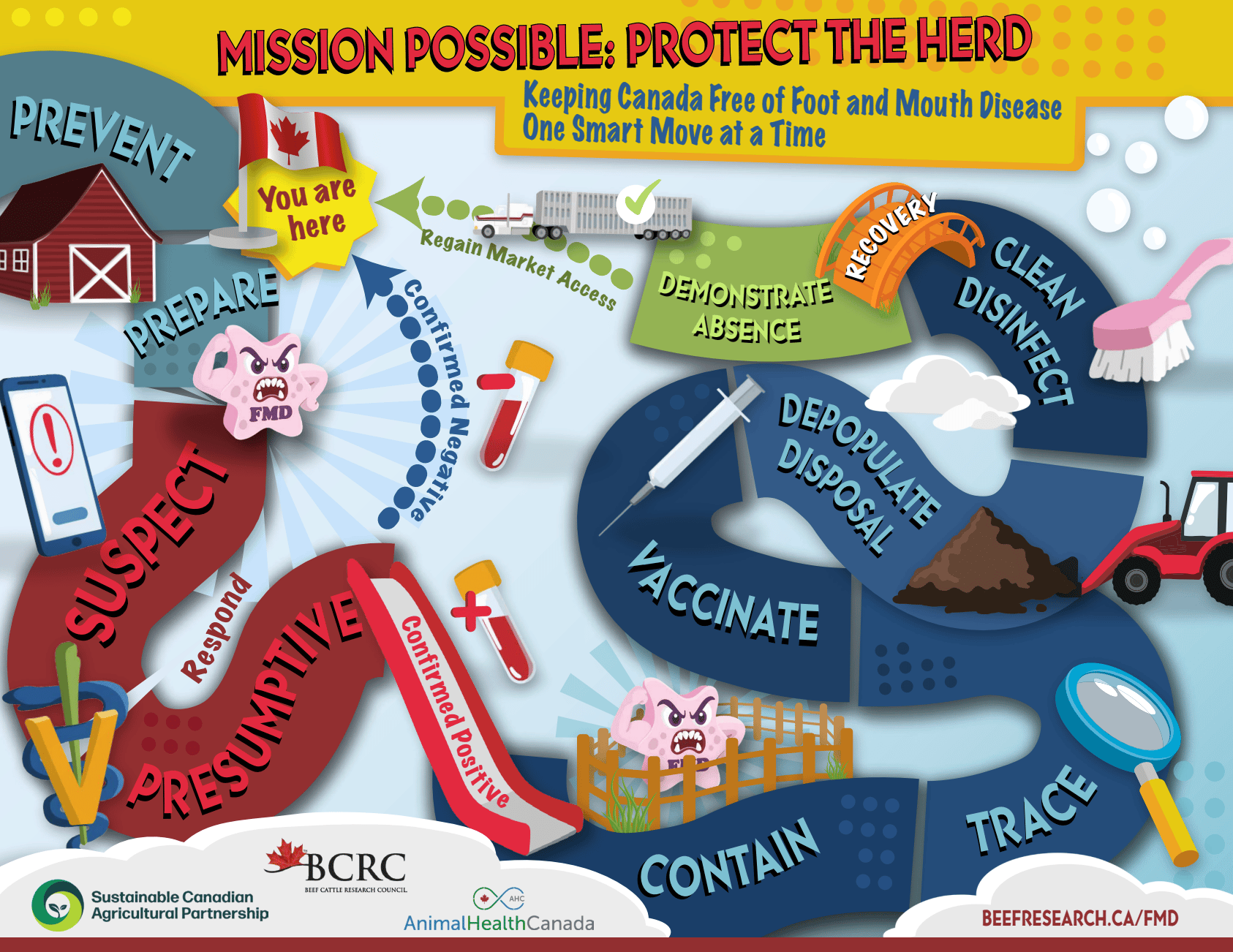
This two-page illustrated resource, developed by our team for the Beef Cattle Research Council, walks producers and industry partners through the full progression of a Foot-and-Mouth Disease (FMD) response, from prevention through recovery. Designed as an engaging visual tool, it helps users understand the key stages of an FMD event, and what actions are expected at each point:
1️⃣ Prevent & Prepare 2️⃣ Suspect 3️⃣ Presumptive 4️⃣ Confirmed Positive 5️⃣ Contain | 6️⃣ Trace 7️⃣ Vaccinate 8️⃣ Depopulate & Disposal 9️⃣ Clean & Disinfect 🔟 Recover |
The board highlights practical steps such as enhanced biosecurity, movement controls, emergency vaccination, traceability requirements, and the process for demonstrating disease absence before market access can be regained.
Overall, this resource provides a simple, accessible way for producers and industry teams to quickly grasp the complexity of FMD response and reinforces Canada’s shared goal of keeping FMD out — or responding effectively if it ever occurs.